
Welcome
The Robotics Innovation Center (RIC) belongs to the Bremen location of the German Research Center for Artificial Intelligence (DFKI GmbH). Headed by Prof. Dr. Dr. h.c. Frank Kirchner, here scientists develop robot systems to be used for complex tasks on land, under water, in the air, and in space. The RIC closely cooperates with the Robotics Group at the University of Bremen.
The DFKI is the leading German research centre in relation to innovative software technology based on methods of Artificial Intelligence. It comprises sites in Kaiserslautern, Saarbrücken, Bremen and Lower Saxony, as well as laboratories in Berlin and Darmstadt, and branch offices in Lübeck and Trier.
For further information please visit this page.
Latest Projects
Adaptive robot ConTrol with Generative Pre-trained…
Logistics, Production and Consumer
Assistance- and Rehabilitation Systems
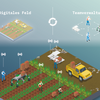

Digital Ecosystem for AI-Based Robotics (RoX) -…
Agricultural Robotics
Assistance- and Rehabilitation Systems
Data management
Electric Mobility
Logistics, Production and Consumer
Quantum Computing
SAR- & Security Robotics
Underactuated Robotics
Underwater Robotics
Space Robotics
Knowledge management




Latest Videos
Persim: Autonomous navigation on steep slope of a crater

By playing the video, you accept YouTube's privacy policy.
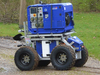
The autonomous navigation of Coyote 3 is presented while a steep slope is traversed. The map below on the right shows the traversable areas as green, and the obstacles in red. The planned path to be followed is also displayed in the visualization.
Robots on a Christmas present mission: Christmas greetings from the DFKI Robotics Innovation Center

By playing the video, you accept YouTube's privacy policy.
Wir blicken auf ein ereignisreiches Jahr 2024 zurück, das uns viele spannende Entwicklungen in der Robotik gebracht hat. Nun möchten wir Euch mit einem besonderen Weihnachtsgruß in die Feiertage entlassen.
Open Day 2024: Numerous interested visitors experience future technologies up close

By playing the video, you accept YouTube's privacy policy.
Around 900 visitors, including many school classes, took the opportunity to take a look behind the scenes and learn about research in the fields of artificial intelligence, robotics and secure systems at the DFKI Open Day in Bremen.
ContinuumPKM: PArallel COntinuun MAnipulator (PACOMA)

By playing the video, you accept YouTube's privacy policy.
PACOMA is a flexible robotic system for space missions, using a spring-tendon design and RUS kinematics. It ensures precise control, stability, and safe docking interactions.
New salvage diver group

By playing the video, you accept YouTube's privacy policy.
Robots that explore unknown waters, map the seabed, recover contaminated sites or inspect offshore wind farms - the Robotics Innovation Center in Bremen has been researching intelligent robotic systems for underwater use for many years. In addition to the scientific expertise required to develop high-performance technologies, specialist expertise and state-of-the-art technology are also required to ensure the safety and successful completion of underwater tests. For this reason, DFKI, with the support of the German Federal Agency for Technical Relief (THW) and the Employers' Liability Insurance Association for Energy, Textiles, Electrical and Media Products (BG ETEM), has now founded a salvage diver group at the Bremen site. The video shows the range of tasks performed by the DFKI rescue diver group. Contact: diving(at)dfki.de
Field tests during the Persim project at the Vulcano Summer School 2023

By playing the video, you accept YouTube's privacy policy.
Asguard v4 during the Vulcano Summer School of 2023. The rover was involved in various autonomous navigation tests and data collection activities.